
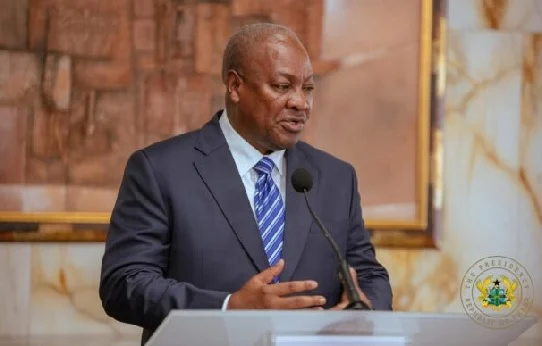
Alleged border transit diversion and revenue evasion scheme spark strong reaction from Prez. Mahama.
President John Dramani Mahama has expressed strong displeasure over allegations of a sophisticated border transit diversion and revenue evasion scheme believed to be operating within Ghana’s customs corridor system. The alleged practice, if confirmed, could have serious implications for domestic revenue mobilization and national economic stability.
The Allegations
Preliminary reports suggest that certain transit consignments declared for onward movement to neighboring countries may have been diverted into the local market without the appropriate duties and taxes being paid. Under standard customs procedures, goods in transit are exempt from import duties because they are not intended for domestic consumption. However, diversion of such goods into the Ghanaian market constitutes revenue evasion and a breach of customs regulations.
Sources indicate that the scheme may involve manipulation of transit documentation, tampering with tracking systems, and possible collusion within segments of the clearance and logistics chain. While investigations are ongoing, the scale of the alleged activity has raised concerns about systemic weaknesses in border monitoring and cargo tracking mechanisms.
President Mahama’s Response
In reacting to the development, President Mahama described the allegations as “deeply troubling” and emphasized that protecting the public purse remains a non-negotiable priority. He warned that any individuals, syndicates, or institutions found complicit will face the full force of the law.
The President further directed relevant agencies to:
- Conduct an immediate forensic audit of transit transactions.
- Strengthen electronic cargo tracking and reconciliation systems.
- Intensify surveillance at major entry and exit points.
- Collaborate with anti-corruption institutions to ensure transparency and accountability.
- He stressed that revenue leakages undermine government’s ability to fund critical sectors such as health, education, infrastructure, and social protection.
Economic Implications
Customs revenue constitutes a significant component of Ghana’s domestic revenue envelope. Transit diversion schemes distort trade data, create unfair competition for legitimate importers who pay duties, and weaken fiscal consolidation efforts. At a time when the government is prioritizing economic recovery and revenue optimization, any systemic evasion poses a direct threat to macroeconomic stability.
Policy analysts argue that strengthening risk management systems, enhancing inter-agency data integration, and deploying real-time monitoring technologies will be critical in preventing future occurrences.
Way Forward
The President has assured the public that investigations will be transparent and that findings will be made public where appropriate. He reiterated his administration’s commitment to good governance, institutional reform, and zero tolerance for economic sabotage.
As authorities work to verify the claims, stakeholders within the trade, logistics, and customs sectors are being urged to cooperate fully with investigators to restore confidence in Ghana’s border management systems.
Further updates are expected as official inquiries progress.