
Global Turning Point as UN Declares Slave Trade as One of Humanity’s Greatest Crimes
The United Nations General Assembly has formally declared the transatlantic slave trade as one of the gravest crimes against humanity, reinforcing global recognition of one of history’s most devastating injustices and its enduring consequences.
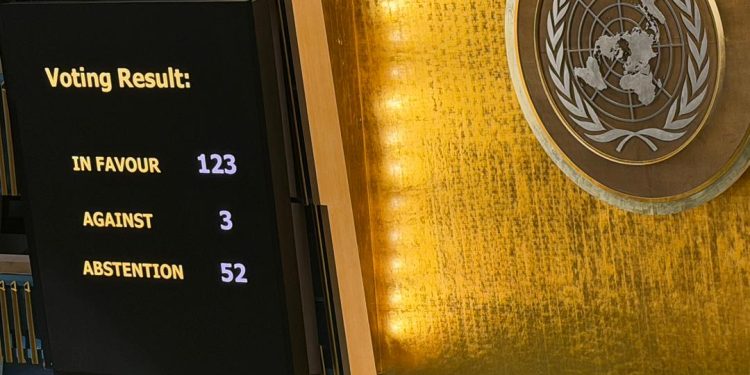
The resolution was adopted with overwhelming support from member states, reflecting a broad international consensus on the need to confront the legacy of slavery and its lasting impact on societies across the world. The strong voting outcome underscored a shared commitment among nations to acknowledge historical truth and promote justice, remembrance, and education.
The declaration recognizes the immense human suffering caused by the transatlantic slave trade, during which millions of Africans were forcibly taken from their homelands, subjected to brutal conditions, and exploited across continents. By classifying the slave trade as a crime against humanity, the Assembly highlights its deep and lasting effects on social structures, economic systems, and cultural identities.
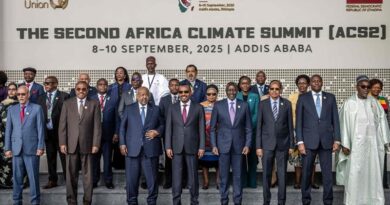
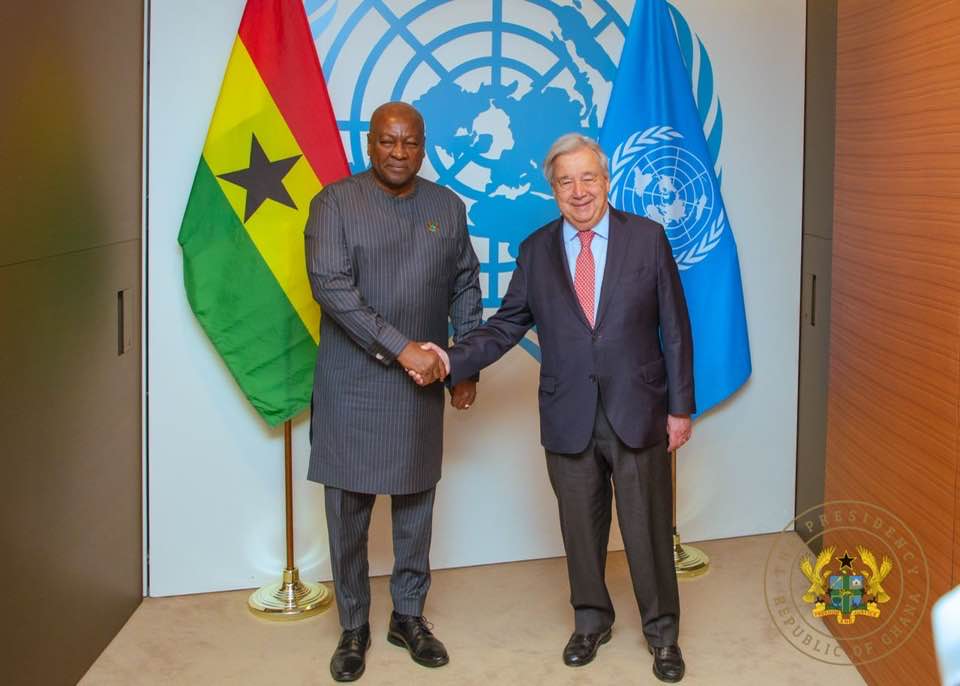
A key feature of the process leading to the adoption of the resolution was the active engagement of African leadership. John Dramani Mahama, President of Ghana, played a prominent role in advocating for stronger global recognition of the historical injustice. Working alongside a delegation of African leaders, he contributed to building consensus and ensuring that the voices and perspectives of the African continent were clearly reflected in the final outcome.
The African delegation emphasized the importance of historical accountability, education, and the need for sustained international dialogue on the long term consequences of slavery, including inequality, marginalization, and systemic injustice. Their collective advocacy helped shape the tone and direction of the resolution, positioning it not only as a statement of recognition but also as a call to action.
The resolution aligns with ongoing efforts by the United Nations to address historical injustices and promote global awareness through education and remembrance initiatives. It also complements observances such as the International Day of Remembrance of the Victims of Slavery and the Transatlantic Slave Trade, which serves to honor the memory of those who suffered and to educate future generations.
Member states have been encouraged to strengthen educational systems, support memorial initiatives, and invest in research that deepens understanding of the transatlantic slave trade and its legacy. The resolution further calls for continued collaboration among governments, institutions, and civil society to address the ongoing effects of this history.
The declaration has been widely welcomed by global leaders and human rights advocates, who see it as a meaningful step toward recognition and moral accountability. While it does not erase the past, it reinforces the importance of collective responsibility in shaping a more just and inclusive future.